

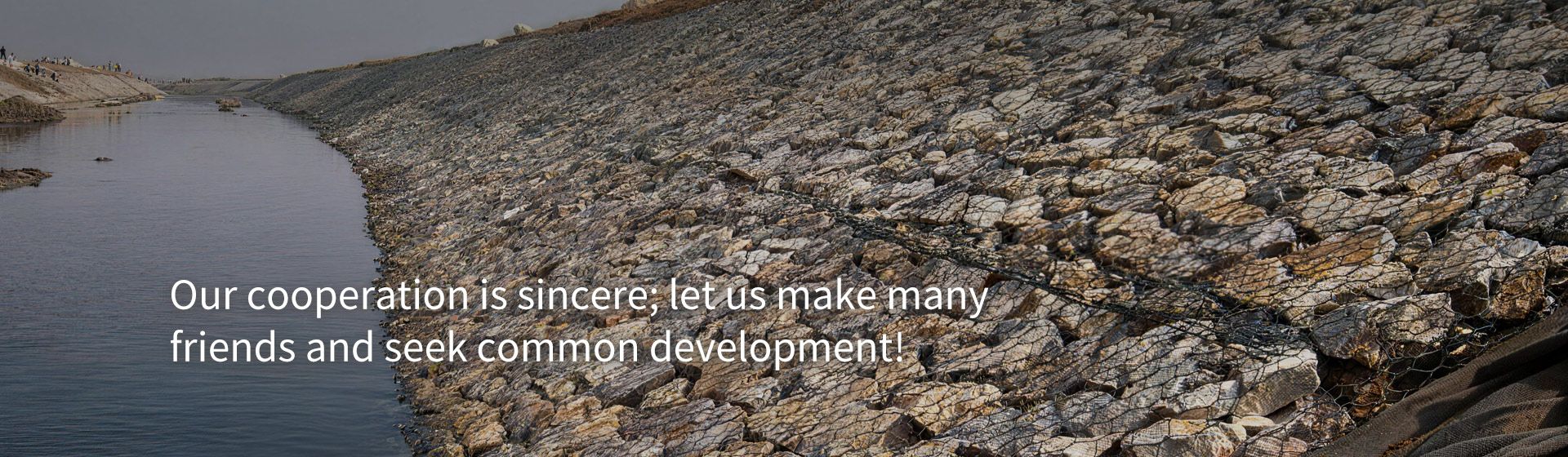
For civil engineers and procurement managers, the choice of retaining structures is not just about initial price, but also about long-term risks. Rigid concrete walls are prone to cracking due to uneven settlement, while gabion systems offer flexibility and drainage capabilities.
As infrastructure construction demands shift towards sustainability and speed, traditional rigid methods are being replaced by flexible metal mesh solutions. Below are ten reasons to adopt gabion baskets in your next project, covering both technical and economic aspects.
Executive Summary: The Shift from Rigid to Flexible Infrastructure
To understand the value of gabion systems, we must first understand the shortcomings of traditional infrastructure. The historical approach to civil engineering has been to “fight” against nature. We build rigid concrete gravity walls, attempting to resist the immense pressure of soil and water through their sheer mass and stiffness.
The problem with rigid structures is their brittleness. When even a slight movement occurs in the foundation beneath the concrete wall, the structure cannot adapt, eventually leading to cracking. Once cracks appear, water seeps into the reinforced areas, corrosion begins, and can ultimately result in costly repairs or complete structural failure.
Gabion systems operate on a completely different principle. They are monolithic yet flexible structures. A gabion wall is essentially a single, enclosed block of stone, functioning as a single unit of gravity. However, because it is connected by a twisted wire mesh, it is movable. If the foundation settles, the wall settles with it. It deforms rather than cracks, thus maintaining structural integrity and sustaining its function even under immense stress.
For project managers, this means risk aversion. You are no longer relying on the perfect performance of a solid foundation; you are installing a system designed to cope with the imperfections of the real world.
But beyond structural mechanics, our most direct conversations with clients revolve around the end result.
Project Cost and Sustainability Analysis
A common mistake when analyzing infrastructure costs is focusing only on the “unit price”—the cost of materials delivered to the site. If you compare one cubic meter of concrete to one cubic meter of gabion material, the prices are indeed comparable. However, the true economic advantage of gabions only becomes apparent when considering the total installation cost.
Consider the ancillary costs of a concrete wall: deep foundation excavation, timber and labor required for formwork, concrete pump rental, complex drainage pipes behind the wall, and the 28-day curing period necessary before backfilling and load-bearing.
Gabion systems eliminate virtually all of these steps. No formwork is needed, no curing time is required, and drainage is inherent to the product itself.